Hi there!
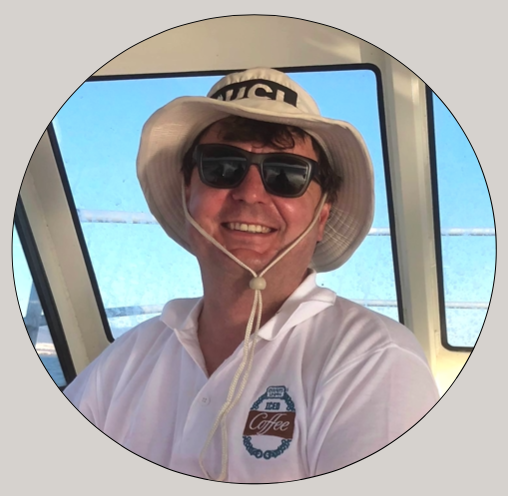
Paul Macdonald, from downunderpix and Edithburgh Diving, has spent over two decades documenting the jetty’s marine life. As a professional underwater photographer, cinematographer and dive guide, he’s logged hundreds of hours beneath Edithburgh Jetty, capturing rare species like the Histiophryne narungga – Rodless Anglerfish. He described the devastation as “heartbreaking,” noting the disappearance of vibrant sponge gardens and iconic creatures such as leafy sea dragons. His guided tours and citizen science efforts have helped raise awareness and document the scale of the loss.
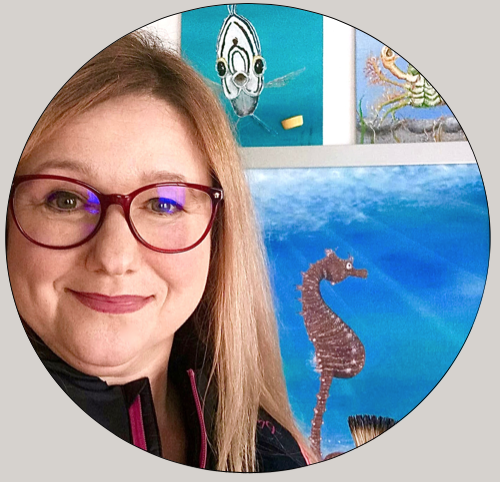
Elizabeth Solich, from downunderpix and Edithburgh Diving, local artist, book-writer, and underwater photographer, has joined Macdonald in chronicling the underwater transformation at Edithburgh. Her artistic lens brings emotional depth to the crisis, capturing both the beauty and the loss beneath South Australia’s jetties.”
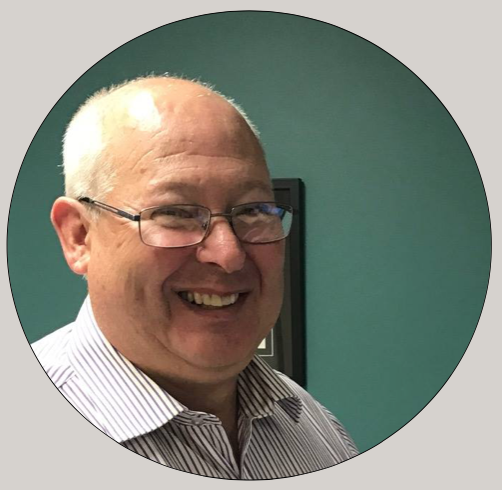
Associate Professor Craig Styan is a marine ecologist and ecotoxicologist based at Adelaide University. Craig has led marine pollution and ecosystem monitoring programs across southern Australia and beyond, with a focus on understanding the impacts of coastal developments like ports and dredging, pollution and desalination, and changes resulting from habitat loss. Craig has over 40 years’ diving experience in South Australia (he did start very young!) and first dived Edithburgh Jetty in 1988. He then spent hundreds of hours under the jetty during his PhD on scallops in the 1990s, as well as hundreds of hours re-visiting and monitoring the jetty underwater since. His favourite critter there is the Doughboy Scallop (Mimachlamys asperrima) – you can’t do a PhD on an animal and not get attached – but likes all the other marine invertebrates found southern Australian waters too. Craig is providing statistical analysis advice to the project and has long-term (pre HAB) photo monitoring data that will be used as a comparative baseline to assess change and recovery.
Janine Baker (Marine Janine) has worked in South Australian marine research for 36 years, and in marine education for 15 years, doing contracts for government agencies, NGOs, universities, research orgs, and as a sole trader. Since 2018, Janine has worked mainly in marine citizen science project management. Janine has dived Edithburgh infrequently over more than 3 decades, including timed swim fish counts and benthic fish searches. Janine’s first dive at “the Burgh” was in 1988 as a marine zoology student of former Adelaide Uni researcher Professor Alan Butler, who was leading research in the marine ecology field of patch dynamics at the time. A highlight of Janine’s few dives at Edithburgh was finding and photographing a prickly anglerfish in 2007, and a pregnant spotted stingaree in 2014. Janine has collated records from fish counts and photos by dive buddies, to produce a complete list of bony fish species records at Edithburgh over 10 years. Marine Janine has presented occasionally to community – both live and on-line – about the marine research values, ecological values and biodiversity of Edithburgh jetty. In 2014, Janine ran field work in conjunction with marine citizen science colleagues from Victoria to learn more about the micro-invertebrate fauna at Edithburgh jetty and Pool, and several new / previously undescribed species were found. Janine has worked on seadragon data since 1996, previously analysing and reporting on community sightings for the original Dragon Search program in several States. Since 2013, Janine has work periodically with more than 120 divers in SA to monitor nearshore seadragon populations, developing reliable visual markers to recognise individual seadragons over space and time. Edithburgh is one of those long term seadragon monitoring sites. Janine assists some aspects of the community-managed Edithburgh and Wool Bay Jetties Marine Watch project when time permits.
Together with a committed team of volunteer divers and marine scientists, Paul Macdonald and Elizabeth Solich are building a powerful visual and ecological archive of the Edithburgh underwater environment – capturing its condition before, during, and with hope, after the devastating Harmful Algal Bloom. Supported by experts like Dr Craig Styan (UniSA) and Dr Janine Baker, their work combines rigorous data collection with poignant imagery that documents the dramatic transformation of a once-thriving reef.
What was once a vibrant marine habitat teeming with life – leafy sea dragons, blue-ringed octopus, goatfish, and sea snails – now resembles a barren seascape. The haunting presence of lifeless marine species scattered across the sea floor tells a story that words alone cannot convey.
“It’s like diving through a ghost town,” Macdonald reflects. “The silence is deafening.”
This project is not only a scientific endeavour – it’s a testament to community resilience, environmental stewardship, and the urgent need to protect South Australia’s coastal ecosystems.